
Ventilation
Explore our offer
Click below to see the offer.

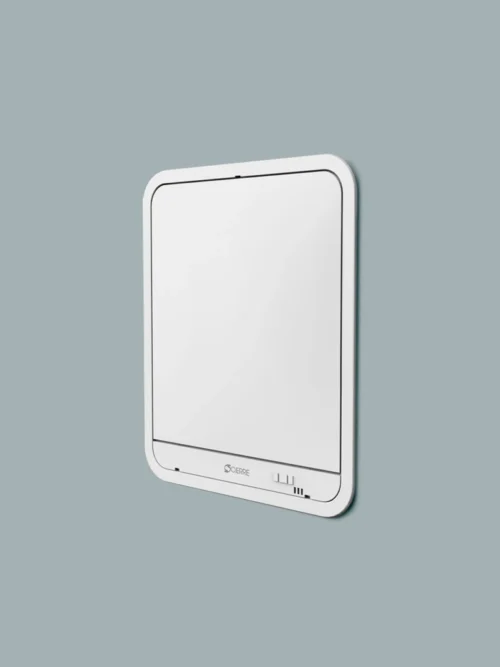
Ventilation for a healthy and energy-efficient home
Ventilation is becoming an increasingly important part of modern living, as it has a direct impact on the health, comfort and energy efficiency of the home. As we spend most of the day indoors, it is air quality deteriorates rapidly if there is no constant air exchange.
Modern ventilation systems allow fresh air to enter without opening windows, while removing moisture, odours, CO₂ and other harmful substances. And heat recovery conserves energy, reducing heating and cooling costs.
What is ventilation and why is it important?
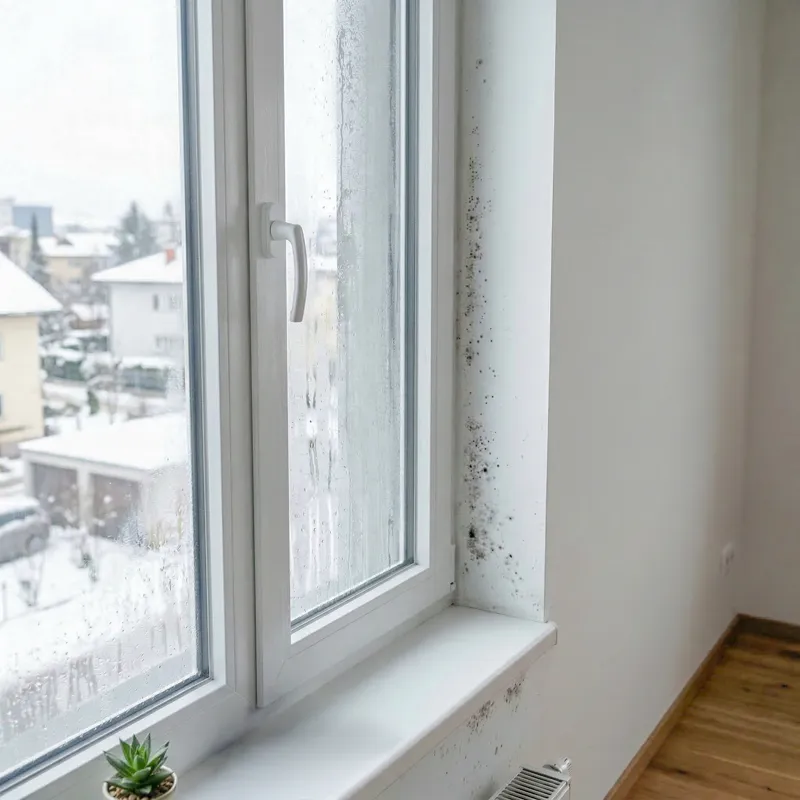
Ventilation means controlled air exchange between inside and outside. In the past, houses “breathed” through leaky windows and walls, but today, thanks to better insulation, buildings are almost completely sealed. This is good for energy efficiency, but without adequate ventilation, problems can quickly arise.
Moisture starts to build up on windows and walls, leading to mould. CO₂ concentrations rise, causing fatigue, headaches and poor concentration. Radon, a radioactive gas that poses a serious health risk, can also build up in some areas. The ventilation system eliminates these problems so that fresh air circulates continuously, while maintaining the heat in the room.
Types of ventilation systems
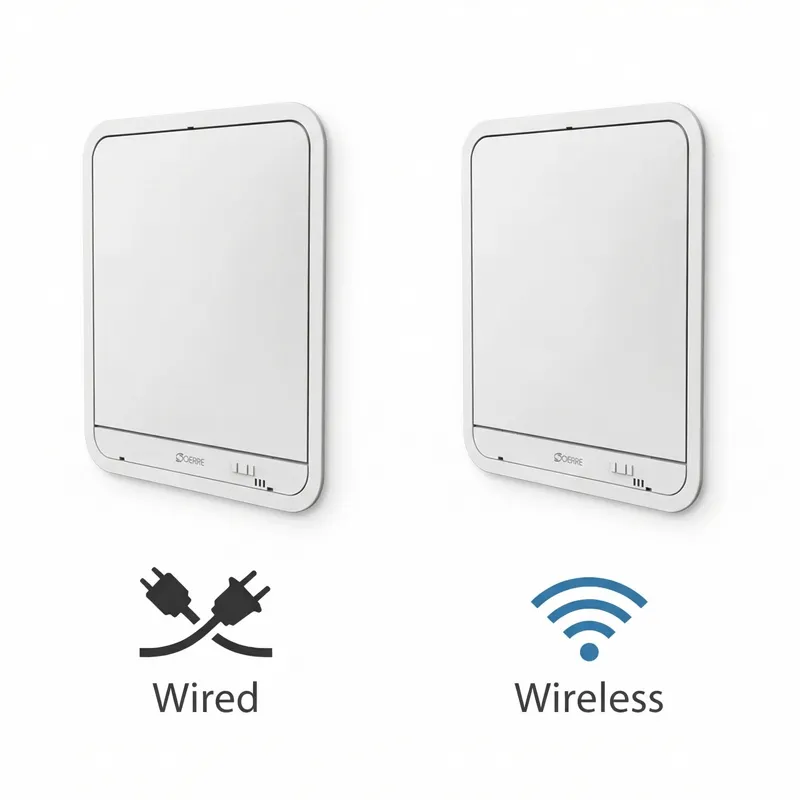
Ventilation systems differ according to their mode of operation and the extent of ventilation. There are different ventilation systems, to meet the specific needs of the space and its users. Among the most popular are central ventilation systems, allowing ventilation of the whole building, and local ventilation systems, used in individual rooms.
- Wired ventilation systems: This version uses a wired connection between the units. Reliability and system stability are key advantages of these solutions, which is why they are popular in larger facilities where a higher airflow capacity is required.
- Wireless ventilation systems: Wireless versions allow greater flexibility in set-up and operation, as there is no need for cabling. These systems are easy to install, suitable for smaller spaces and can be connected to a remote control application.
How does the ventilation system work?
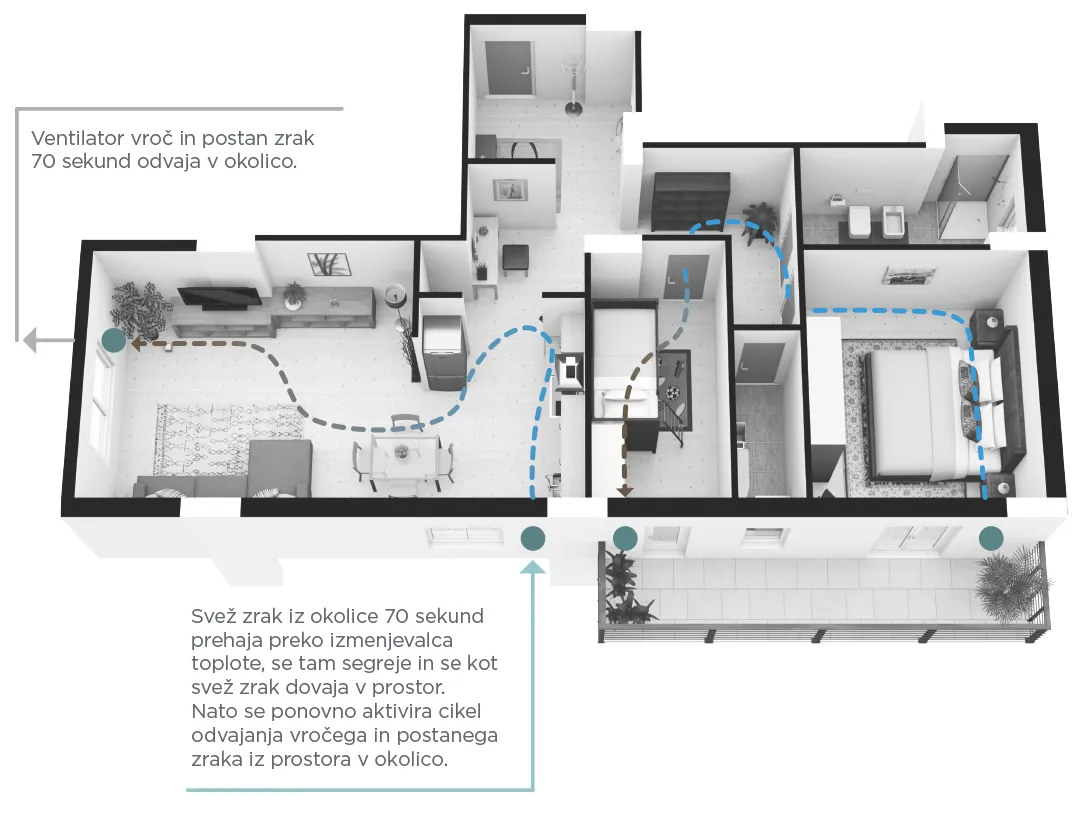
Operation of the ventilation system is based on a constant flow of air. The exhaust air is extracted from the room while fresh outside air is supplied. In heat recovery systems, heat is transferred from the waste air to the fresh air, allowing ventilation without heat loss.
The filters in the unit make sure that clean air, free of dust, pollen, allergens and other particles, enters the room. More advanced systems also include humidity, CO₂ or VOC sensors that automatically adjust their operation according to the air quality in the room.
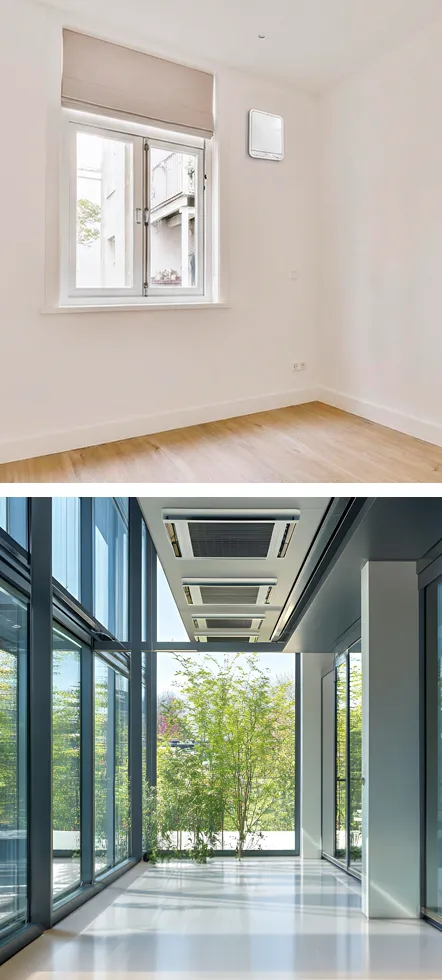
Local or central ventilation?
Local ventilation is ideal for rooms where you want to quickly and effectively solve problems with damp, odours or bad air. Installation is easy, as the unit only needs an opening through an external wall.
Central ventilation is the best choice for new builds or larger buildings where you want to ventilate the whole home in a uniform way. Central systems offer maximum energy efficiency, quiet operation and full automation, but require ductwork and a slightly higher initial investment.
| Local ventilation | Central ventilation |
|---|---|
| Suitable for renovations, apartments and individual rooms. | The best choice for new buildings and larger structures. |
| Easy installation without hoses. | Requires piping throughout the building. |
| Lower initial investment. | Maximum energy efficiency and comfort. |

Ventilation units (local units)
Local ventilation units are compact units that are installed directly into an external wall. They are easy to install the perfect solution for bedrooms, living rooms, bathrooms, kitchens, basements and attics.
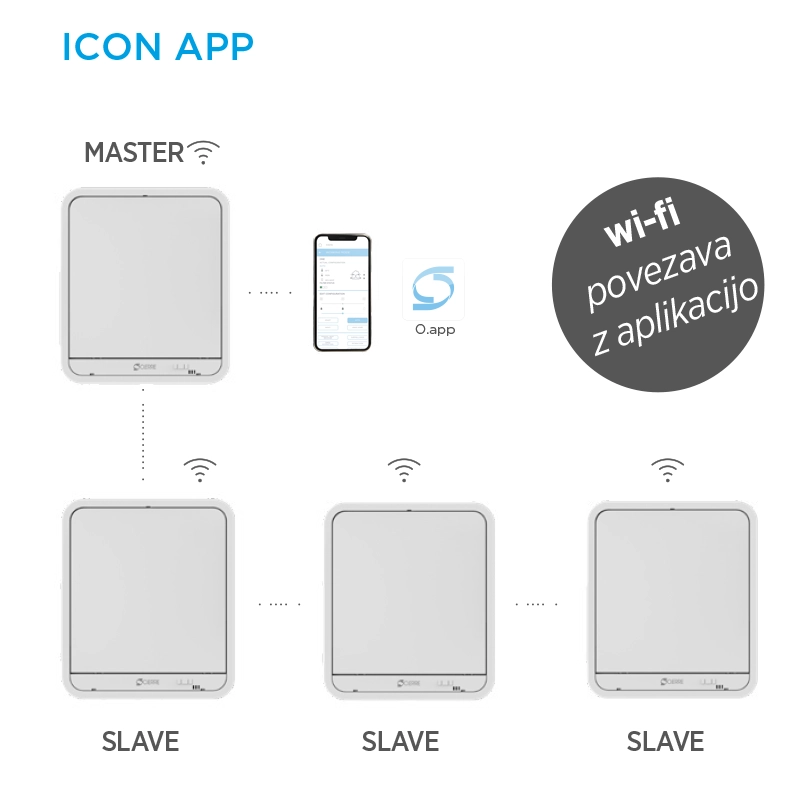
They are used where it is not possible or practical to install a central system. Advanced models allow multi-unit integration, control via an app, quiet operation and high energy efficiency. Air filtration also makes them suitable for allergy sufferers and anyone who wants to improve the air quality in individual rooms.
Benefits of using ventilation systems with an app
One of the biggest The advantages of modern ventilation solutions are the ability to control them via an app. With this functionality, users can remotely monitor and control the operation of the ventilation system, resulting in greater comfort and efficiency.
The apps allow you to set ventilation schedules, monitor air quality and optimise the system's energy performance. This advanced feature is particularly useful in modern smart homes, where the aim is to maximise automation and energy efficiency.
The importance of quality ventilation
Ventilation is not only important for comfort, but also for health reasons. Lack of fresh air can lead to indoor humidity saturation, which leads to mould growth, bad odours and negative health effects. Ventilation systems help to regulate humidity levels, remove odours and ensure optimal air circulation.
A properly functioning ventilation system also reduces the need for heating or cooling, leading to energy savings.
Price of the ventilation system
The price of the ventilation system is depends on the type of system, the size of the building, the number of units and the complexity of the installation.
Local ventilation systems are more affordable and typically range between €350 and €1,200 per unit, depending on capacity, filtration and features.
Central ventilation systems represent a larger investment, which can range between €4,000 and €12,000, but offer the highest level of comfort and energy efficiency.
The type of heat exchanger, the quality of the filters, control via an app and possible integration into a smart home also influence the final price.
How to choose the right ventilation system?
When choosing a ventilation system, it is important to take into account the size of the room, the level of humidity, the number of people in the room and whether it is a new build or a renovation. The main factors are airflow, which must be appropriate to the size of the room, and noise, which is particularly important in bedrooms. Devices with higher heat recovery efficiencies allow for lower heating costs, while advanced filters improve air quality. If you want full automation, it makes sense to choose a system with sensors and app control.
The most accurate choice is professional tour of the building, to determine the optimal solution for your needs.
Eco-fund subsidies for ventilation
One of the important advantages of modern ventilation systems is the possibility of obtaining a subsidy from the EcoFund. This financial incentive is aimed at improving the energy efficiency of buildings and reducing heat loss, which is why heat recovery ventilation systems are often eligible for grants.
The amount of the subsidy is depends on the type of installation, the efficiency of the heat recovery and the technical requirements set by the EcoFund. With the right system, the investment can be significantly reduced and the return on investment is faster.
The subsidy application process also includes the relevant documentation, proof of installation and technical data of the appliance.
The most common ventilation mistakes
One of the most common errors is choosing a ventilation unit that does not have a large enough airflow for the room, in which it is incorporated. Improper installation is also a common problem, which can lead to more noise or poorer heat efficiency. Incorrect location of the unit, for example too close to windows or radiators, can reduce ventilation efficiency. It is also common that users do not clean or change filters often enough, which affects air quality and system performance.
Choosing the wrong system (local instead of central or vice versa) can lead to dissatisfaction and extra costs.

Frequently asked questions
Does local heat recovery prevent mould?
Yes, because it continuously draws moisture out of the room and brings in fresh air, which prevents mould and mildew.
Are ventilation systems loud?
Modern systems are extremely quiet, and the best units have noise levels as low as 3 dB, which is quieter than human breathing.
How much energy does a ventilation system consume?
Consumption is very low, often comparable to an LED bulb, with most devices consuming between 3 and 10 W.
Can I connect multiple local units?
Yes, most modern systems allow multiple units to operate synchronously, providing even ventilation throughout the apartment.
Does ventilation help allergy sufferers?
Yes, F7 or HEPA filters effectively remove pollen, dust and allergens from the air.
Does ventilation reduce heating costs?
Heat recovery systems recover heat from the exhaust air, significantly reducing heat loss.
Is ventilation suitable for older houses?
Local units are the ideal solution for renovations as they do not require pipework.
How often do I need to change the filters?
Cleaning or replacement every three to six months is recommended, depending on usage and ambient air quality.
Is installation difficult?
Installation of local units is quick and clean, usually taking only a few hours, without major space intervention.
Ventilation is the cornerstone of a healthy and comfortable home. With modern ventilation systems, you can ensure fresh air, optimum humidity, lower heating costs and protection against mould and radon. The right system improves your quality of life and protects your home from moisture damage in the long term.
If you would like professional help with your choice, please contact us and together we will find the best solution for your home. Get a free informative calculation!