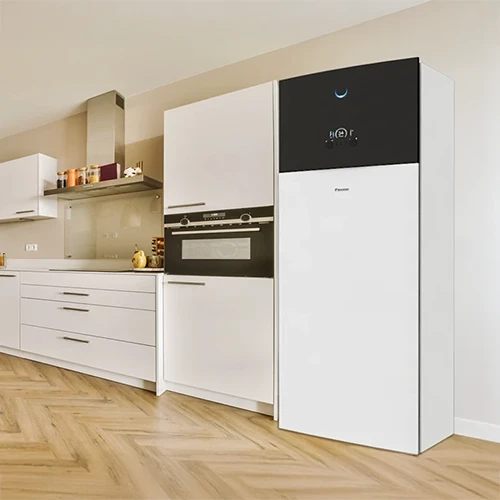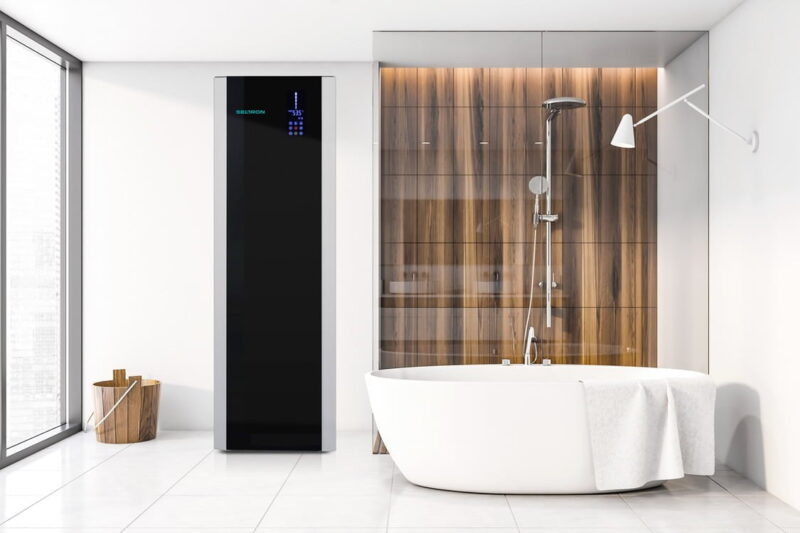

Heat pump for sanitary water 300 l: how to choose the right one and how much does it cost?
The 300-liter hot water heat pump is an interesting solution for households that use a lot of hot water and want to reduce the cost of heating it. The 300-liter volume is suitable primarily for larger households; when choosing, it is not only the size of the storage tank that matters. The efficiency and final cost are also influenced by the heat pump’s efficiency, the method of extracting heat from the air, the possibilities of connecting to other energy sources, the quality of insulation, and the method of use.
If you are looking for a heat pump for sanitary water 300 l, Therefore, before purchasing, it is worth checking more than just the price of the device.
In short: A 300-liter sanitary heat pump is particularly suitable for households with high water consumption. When choosing, check primarily the energy efficiency, the way the tank is filled, the possibility of connecting an additional energy source, management, and the ability to connect to a solar power plant.
What is the 300 l sanitary hot water heat pump?
A sanitary heat pump is a device designed to produce hot sanitary water. Unlike a conventional electric heater that directly heats the water with an electric heater, a heat pump uses the heat from the surrounding air for its operation.
Electric energy is needed primarily for the operation of the compressor, fan and controls. The heat pump thus enables the use of less electricity to produce the same amount of hot water than with direct electric heating.
When performing with 300-liter storage container The heat is stored in a larger amount of sanitary water, which is available to the user when they need it. This is especially important in households where a large amount of water is consumed in a short time, for example in the morning or evening.
How many people is a 300 l sanitary hot water heat pump suitable for?
There is no rule that applies when choosing a volume; a larger storage container is always better. What matters is that its size is adapted to the actual consumption of hot water – for orientation, approximately 50 to 80 liters of warm sanitary water per person per day.
For a four-member family, a sanitary heat pump with a volume of up to 300 liters is suitable.
Number of persons | Framework selection | When is a larger volume meaningful? |
1–2 people | smaller storage container | with excessive consumption or frequent use of large amounts of water |
3–4 people | 200–300 l | if the consumption is higher or there are more users at the same time |
4–6 people | 300 l or more | with higher daily consumption and more consecutive withdrawals |
In this case, the habits of the users must also be taken into account. A family that consumes a lot of water for showering, bathing, or other needs will need a larger reserve than a household with the same number of members, but with a lower consumption.
Why choose a 300-liter sanitary heat pump?
The main advantage of the 300-liter model is the greater available volume of hot water. This reduces the possibility of running out of ready-made sanitary water during multiple consecutive uses.
When choosing, it is not enough to just look at the volume. It is also important how efficiently the system uses the available heat and how it manages the water supply.
Greater supply of hot water
300 liters represents a considerable supply of ready-made sanitary water. This is an advantage especially for households with several members, where the need for hot water can arise almost simultaneously.
Lower electricity consumption
The heat pump extracts heat from the ambient air, so it does not use electricity in the same way as a conventional electric heater. An important fact to consider when comparing the devices is therefore COP, which relates the ratio between the heat obtained and the electrical energy consumed under certain measurement conditions.
More possibilities for using renewable energy
If the sanitary heat pump is connected to a solar power plant, the preparation of sanitary water can be adapted to the availability of electricity from the photovoltaic system. The SELTRON SAN device has a function designed for this. PV.
How does a heat pump for domestic hot water work?
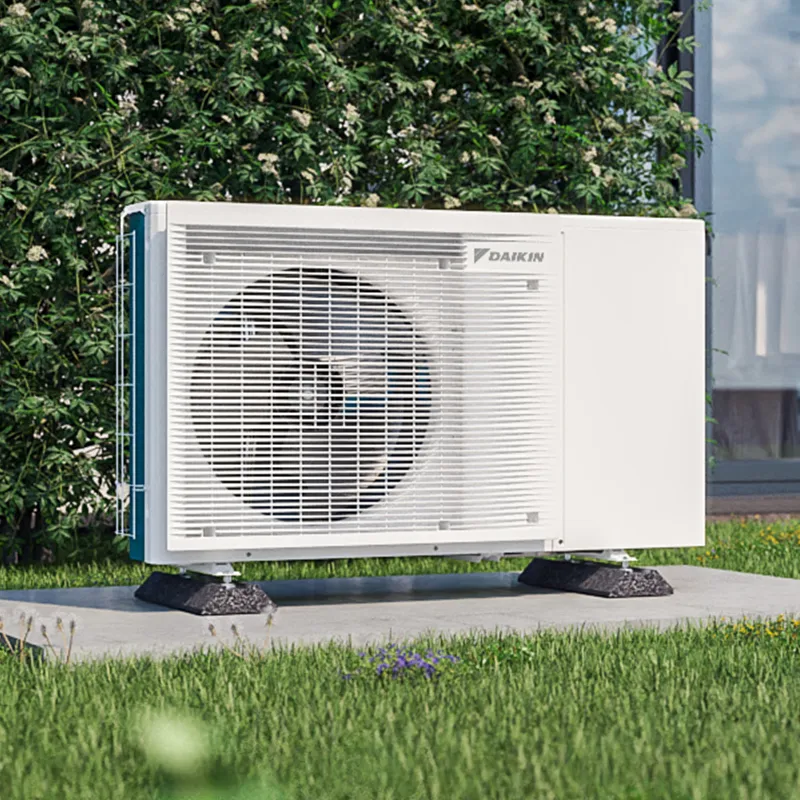
The operation of the sanitary heat pump is based on a cooling circuit. The device extracts heat from the surrounding air and transfers it to the sanitary water using a coolant and a compressor.
- Extraction of heat from the air: The fan directs the air through the evaporator, from which heat is extracted.
- Coolant pairing: The coolant takes the heat from the air and converts it into a gaseous state.
- Compression: The compressor increases the pressure and temperature of the coolant.
- The transfer of heat leads to: The coolant transfers heat to the water in the reservoir.
- Repetition of the cycle: After the pressure is reduced, the coolant returns to the heat removal process.
The key to efficiency is therefore that the device does not generate all the heat directly from electricity, but transfers a large part of it from the surroundings.
SELTRON SAN 300: what does the 300-liter sanitary heat pump offer?
SELTRON SAN is a sanitary heat pump designed for efficient preparation of sanitary water. The model with a volume of 300 liters is designed for households with a higher need for hot water.
One of the important features of the device is COP 3.7, Which makes the SAN one of the most efficient sanitary heat pumps available on the market. The device falls into the energy class A+.
Capillary exchanger for efficient heat transfer
SELTRON SAN has a patented capillary heat exchanger with a large contact surface with a heat-water reservoir. The larger contact surface enables efficient heat transfer and is one of the elements that contribute to the efficient operation of the device.
Up to 20 % more available hot water with stratification
One of the special features of the SELTRON SAN device is the stratification system. Cold water does not mix the entire stock of already heated water upon arrival, but is directed into the storage tank.
Such a charging method allows up to 20 % more available hot sanitary water at the desired temperature. At the same time, it can reduce the number of on and off cycles of the heat pump.
Possibility of using an additional source of energy
The SELTRON SAN has an integrated additional heat exchanger, which means that sanitary water can also be heated using another source, such as a boiler or a solar system. This allows for greater flexibility in using the existing heating system.
Electric heater for additional heating
The built-in electric heater with a power of 1.5 kW allows for the heating of sanitary water in case of increased current needs or when the compressor is not working.
Touch control
The operation of the device can be controlled via an illuminated, touch-sensitive user interface. This makes setting and monitoring the operation easier.
Heat pump for sanitary water 300 l price – how much does it cost?
Question »heat pump for sanitary water 300 l price« It is one of the most common problems when searching for a suitable device. It is important to distinguish between the price of the device itself and the final investment.
The price of a sanitary heat pump depends on several factors:
- the volume of the container,
- efficiency or COP,
- the quality and performance of the heat exchanger,
- energy class,
- options for connecting an additional energy source,
- functions for the use of electricity from a solar power plant,
- the methods of management and regulation,
- complexity of the installation and the existing installation.
Current price for SELTRON SAN 300 heat pump for sanitary water with exchanger, 300 l is 2,199 € + VAT. Since product prices can change, always check the current price on the product page before making a purchase.

Is a cheaper heat pump always the better choice?
Not necessarily. When comparing two devices, it makes sense to consider the entire cost of ownership, not just the initial price.
If a more expensive device has better efficiency, a more quality heat exchanger, better insulation, the ability to use surplus energy from a solar power plant, and more efficient management, the difference in initial investment may be justified.
It is also important to compare devices under comparable measurement conditions. The mere data on COP without mentioning the measurement conditions is not sufficient for a qualitative comparison.
What should be considered when choosing a thermal pump for sanitary water of 300 l?
1. Volume of the container
First, assess the actual consumption of hot water. 300 liters may be an excellent choice for a larger household, but for a smaller household, a large investment may be unnecessary.
2. Energy efficiency
Our SELTRON SAN heat pump has an energy class COP 3.7 and an energy class A+.
3. How to charge the tank
With a large storage tank, it is not only the amount of water that matters, but also how much usable hot water is actually available. The stratification system in the SELTRON SAN prevents unnecessary mixing of cold and already heated water.
4. Possibility of connection with other sources
If you have a solar power plant, check the possibility of connecting it to a photovoltaic system. The PV function is available on the SELTRON SAN to make more efficient use of the electricity generated from the sun.
5. Option of an additional source of heating
If you have a boiler, solar system or other heat source, it makes sense to choose a device that allows it to be connected. The SELTRON SAN has an additional heat exchanger built in for this purpose.
6. Space for installation
Before purchasing, check the dimensions of the device, access to the space, and the options for connection. It is also important to know where the device will capture the air and where it will discharge it. SELTRON SAN allows for remote capture or air discharge.
Heat pump for sanitary water 300 l or a classic electric boiler?
A classic electric boiler is usually a simpler and cheaper initial solution. Its disadvantage is that it converts electricity directly into heat.
A sanitary heat pump works differently. It obtains part of the required heat from the surrounding air, and uses electricity to operate the heat pump circuit.
Property | Electric boiler | Sanitary heat pump 300 l |
Initial investment | lower | higher |
Method of heating | directly from electricity | transfer of heat from the surroundings |
Energy efficiency | lower | higher |
Possibility of connection with PV | dependent on the system | in the right device can be very useful |
Suitability for greater consumption | dependent on volume and power | 300 l is a suitable choice for larger households |
Is the investment in a sanitary heat pump worth it?
There is no universal answer to this. The profitability of an investment depends on the current consumption of sanitary water, the price of electricity, the method of heating, the efficiency of the selected device, and the duration of use.
An important advantage is that the sanitary heat pump is specifically designed to produce hot water. If you have a high consumption and currently use an energy-consuming method of heating water, the difference in operating costs can be significant.
Therefore, do not focus solely on the question when calculating. »How much does a 300 l heat pump for sanitary water cost?«, But also on the question »How much will the preparation of sanitary water cost me in the next 10 or 15 years?«
Frequently asked questions about the 300 l sanitary hot water heat pump
How many people is a 300 l sanitary hot water heat pump suitable for?
The 300-liter version may be suitable primarily for four-person and larger households, but the final choice depends on actual hot water consumption.
Is 300 l always a better choice than 200 l?
No. The right size depends on the number of users and their consumption. For a smaller household, a 200-liter device may be perfectly sufficient, while a 300-liter storage container is a more sensible choice for higher consumption.
Can I connect a sanitary heat pump to a solar power plant?
Yes, if the device allows it. SELTRON SAN has a PV function that allows the use of the available electrical energy from the solar power plant to produce sanitary water.
Can I heat the sanitary water with another source as well?
The SELTRON SAN offers an additional heat exchanger that allows sanitary water to be heated with an additional source such as a boiler or solar system.
Do I need a 300-liter heat pump if there are four of us in the household?
It is not necessary, but a 300-liter volume can be very suitable. The decision is best made based on actual daily consumption, the number of consecutive draws, and the desired supply of hot water.
What does COP 3,7 mean?
The COP, or coefficient of performance, represents the ratio between the heat energy delivered and the electrical energy consumed under certain measurement conditions. Therefore, when comparing different devices, it is always important to also check the conditions under which the COP was measured.
Heat pump for sanitary water 300 l: is it the right choice for you?
If you have a larger household, a higher consumption of hot water and want to reduce the energy consumption for its preparation, heat pump for sanitary water 300 l It can be a very good solution.
When buying, don't just look at the starting price. Check the energy efficiency, the volume of the tank, the charging method, the quality of the heat exchanger, the options for connecting an additional source, and the connection to a solar power plant.
SELTRON SAN 300 It combines a 300-liter tank, COP 3.7, energy class A+, a patented capillary exchanger, a stratification system, the possibility of an additional source and a PV function.
Do you need help choosing a sanitary heat pump?
When choosing the right volume and design, it is important to consider your needs for hot water, space for installation, and the existing heating system.
Take a look at the SELTRON sanitary heat pump range or send us an inquiry. Our expert selection of equipment can help you avoid an unnecessary high initial investment while ensuring you have enough hot water for everyday use.