Addressing dampness in a space with proper ventilation
Dampness in a room is a common issue that affects the quality of living, well-being, and the condition of a building. In this article, you will learn why dampness occurs, how to recognise it, how proper ventilation helps, and when the use of a ventilation device makes sense.
What's the quickest way to get rid of dampness in a room?
The easiest way to reduce humidity in a room is by combining proper ventilation, adequate heating, and eliminating the source of moisture. If humid air regularly remains in a room, the likelihood of condensation, misty windows, and mould growth increases. Mechanical ventilation is recommended for rooms where opening windows is not sufficiently effective.
Vlaga v prostoru nastane zaradi kombinacije dejavnikov, ki povzročijo, da se vodna para v zraku kondenzira na hladnejših površinah. Glavni vzroki so: 1. **Proizvodnja vlage v zaprtih prostorih:** Ljudje, hišni ljubljenčki, kuhanje, prhanje in sušenje perila vse proizvajajo vlago v obliki vodne pare, ki se sprošča v zrak. 2. **Slabo prezračevanje:** Če se vlažen zrak ne odstranjuje ustrezno iz prostora (z naravnim ali mehanskim prezračevanjem), se lahko vodna para nabira. 3. **Toplotni mostovi in hladne površine:** Tam, kjer so gradbeni elementi (stene, okna, vogali) hladnejši od zraka v prostoru, lahko pride do kondenzacije. To se pogosto zgodi pozimi, ko je zunanja temperatura nizka, notranji zrak pa toplejši in bolj vlažen. 4. **Tlakovna razlika:** Razlika v tlaku med notranjim in zunanjim okoljem (na primer zaradi vetra ali kurjenja) lahko potiska vlažen zrak v gradbene elemente in tam povzroči kondenzacijo. 5. **Uhajanje vlage iz zunanjosti:** V nekaterih primerih lahko vlaga prodira skozi razpoke v zidovih, strehi ali skozi temelje. 6. **Visoka relativna vlažnost:** Če je relativna vlažnost v prostoru konstantno visoka (nad 60-70%), se poveča verjetnost, da bo zrak dosegel točko rosišča in se kondenziral na hladnejših površinah. Ko se vodna para na teh hladnejših površinah ohladi pod točko rosišča, preide v tekoče stanje, kar vidimo kot kapljice vode ali mokre lise.
Moisture occurs during everyday activities such as cooking, showering, drying laundry, breathing and using rooms with a higher vapour load. The problem arises when this moisture is not removed quickly enough.
In well-sealed buildings, natural air exchange is reduced, making it easier for moisture to accumulate in the space. When warm, humid air comes into contact with cooler surfaces, such as windows, external walls, or thermal bridges, condensation occurs. This is often the first sign that the space requires better ventilation.
Signs that there is too much moisture in the room
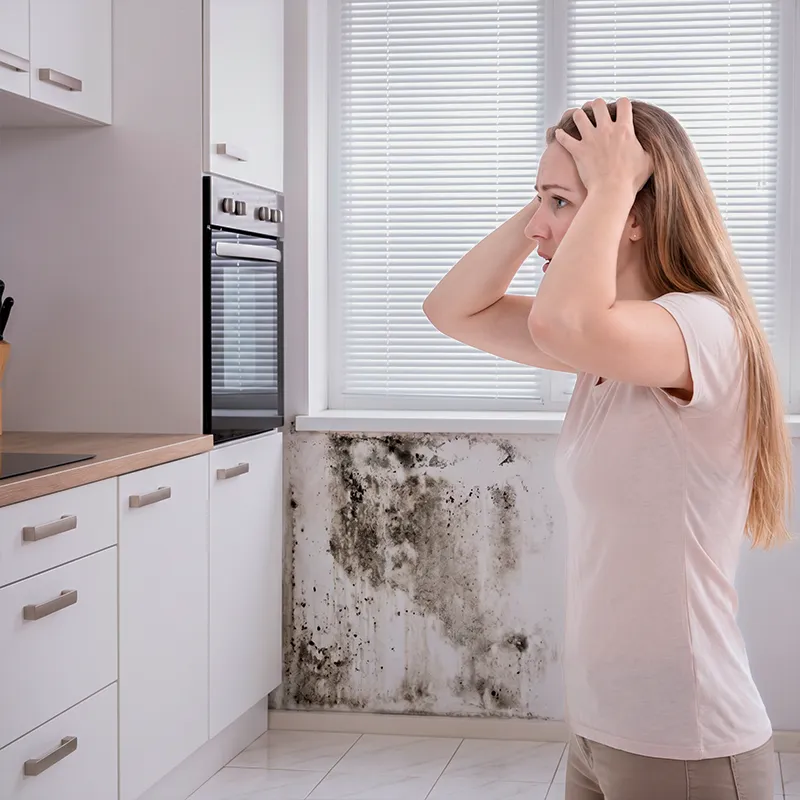
Excessively high humidity can be indicated by condensation on windows, a musty smell, damp patches on walls, peeling paint or plaster, and the appearance of mould in corners, behind furniture, or near window frames. A feeling of heavy, stale air is also a common sign.
If these signs reoccur, it is not enough to simply wipe away the condensation or temporarily remove the mould. The cause must be rectified and a constant exchange of air ensured.
What is a suitable air humidity level?
For a comfortable living environment, it is advisable to monitor the relative humidity of the air with a hygrometer. In living spaces, humidity should generally not remain too high for extended periods, as this increases the risk of condensation and mould growth.
The room temperature is also important. Cold air holds less moisture than warm air, so in underheated rooms, moisture is more quickly deposited on cold surfaces. Effective dehumidification is therefore based on a combination of heating and ventilation.
What is the correct way to ventilate a home?
The most effective method is short, intensive ventilation. Instead of keeping windows slightly open for a long time, it is better to open them fully for a few minutes. This ensures that the air is quickly replaced, and the walls and furniture do not cool down too much.
Moisture needs to be removed from the bathroom immediately after showering or bathing. In the kitchen, it is recommended to use an extractor fan and ventilate additionally after cooking. It makes sense to air the bedroom in the morning, as moisture builds up in the room during sleep due to breathing. Areas where laundry is dried also require special attention, as a lot of moisture is released into the air during this process.
Does a dehumidifier fix the problem?
A dehumidifier can help to temporarily reduce humidity, but it often doesn't solve the underlying cause. If there isn't enough fresh air in the room and moisture is constantly being generated, the problem will recur. The same applies to mould: if only the visible stains are removed, but not the cause of excessive moisture, mould can reappear.
Therefore, it is important in the long term to ensure controlled ventilation of the space.
When is a ventilation system sensible?
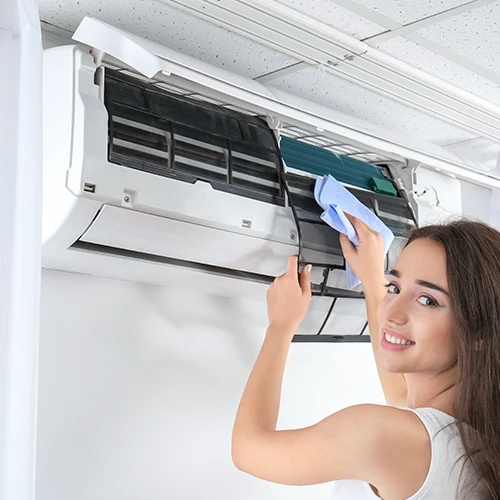
Ventilation systems make sense where natural ventilation is not sufficiently effective or where windows cannot be opened frequently. This applies primarily to bathrooms, bedrooms, smaller living spaces, renovated buildings, well-sealed flats, and rooms where condensation or stale air frequently occurs.
This solution allows for regular air exchange without continuously opening windows. Humid and stale air is extracted from the room, and fresh air from outside is brought in.
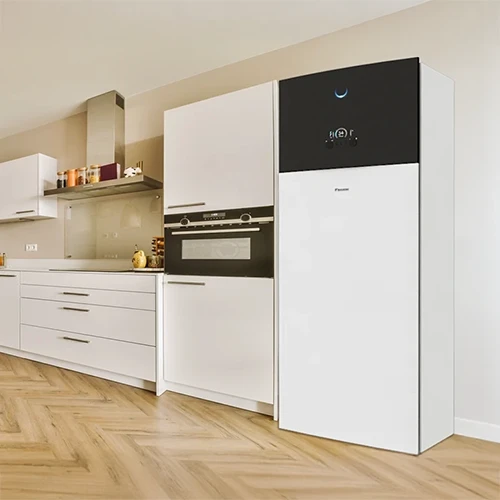
Recommended solution: O.ERRE ICON ventilation unit
For effective ventilation of individual rooms, we offer O.ERRE ICON ventilation unit. It is intended to improve air quality, reduce excess moisture, and create a more pleasant living environment.
O.ERRE ICON enables controlled ventilation with heat recovery. This means the unit aids in air exchange while reducing heat loss compared to simply opening windows. It's suitable for rooms where humidity is often present, for example, bathrooms, bedrooms, and smaller living spaces.



Frequently asked questions
The best way to get rid of dampness in a room is to ventilate it regularly.
The best way is a combination of proper ventilation, suitable heating, and eliminating the source of moisture. If natural ventilation is insufficient, using a ventilation system makes sense.
Does ventilation help against mould?
Yes. Ventilation reduces excess moisture in the air and thus the possibility of condensation. If mould is already present, it must be removed and the cause of excessive moisture must be rectified at the same time.
Where does damp most commonly occur?
Moisture most commonly occurs in bathrooms, kitchens, bedrooms, basements, and poorly ventilated rooms. It is also common in very well-sealed buildings.
When do I need mechanical ventilation?
Mechanical ventilation is recommended when moisture recurs despite opening windows, when a room has no window, or when you want a constant and controlled exchange of air.
Dampness in space can only be effectively reduced if we ensure regular air exchange, adequate heating and eliminate the causes of moisture. Proper ventilation improves air quality, reduces the possibility of condensation and helps prevent the formation of mould.
For a long-term solution, check out the O.ERRE ICON ventilation unit from our range and ensure a fresh, healthy, and comfortable home.
If you would like professional assistance with your selection, please do not hesitate to contact us and together we will find the best solution for your home.